Merchant navy
Cruise ship worker
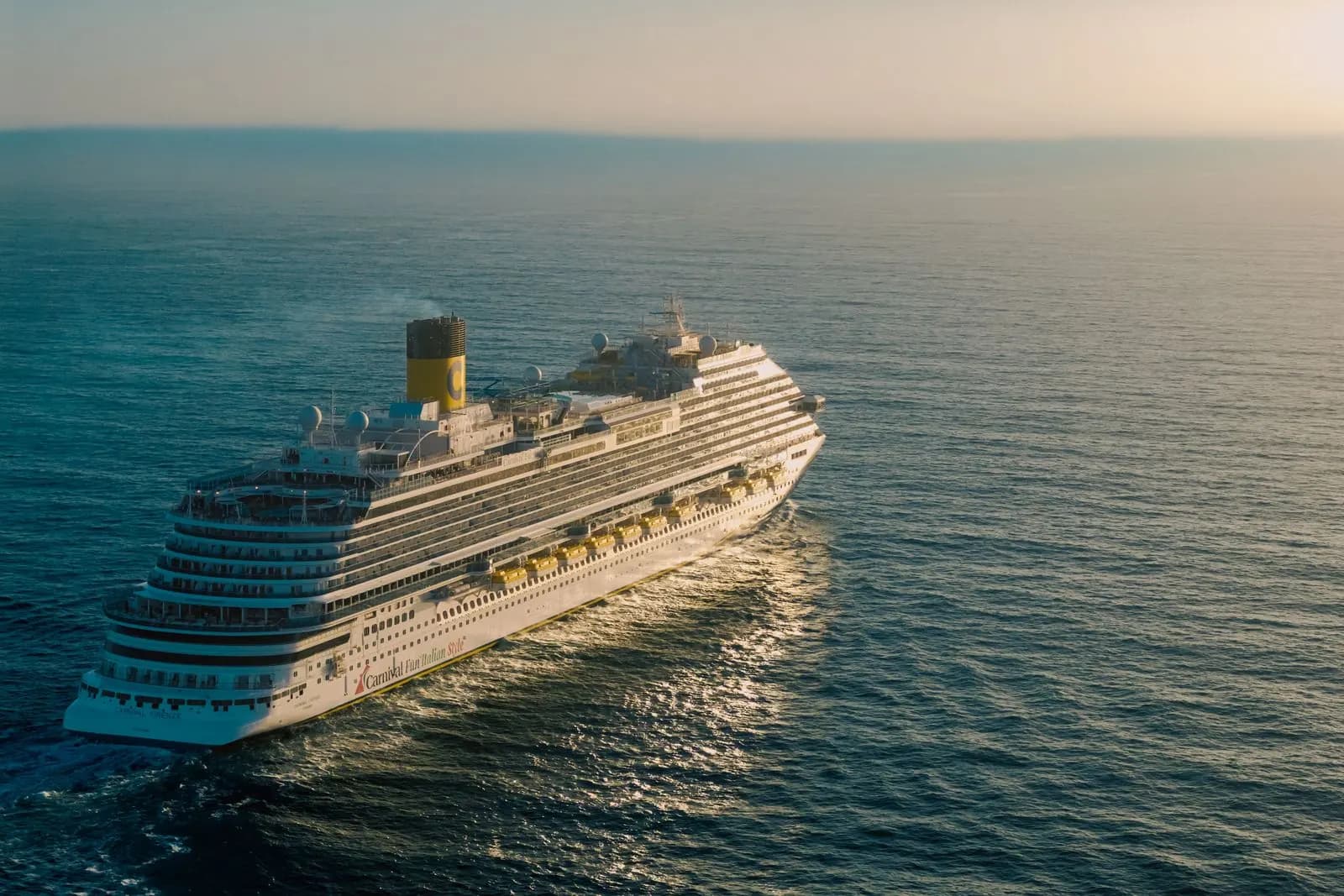
Hospitality and service positions on cruise ships: cabins, restaurants, bars, galley. The maritime requirements of STCW and MLC 2006 apply, and for calls at US ports, a C1/D visa is required.
Photo: Jose Parra / Pexels
- Pay
- No verified data
- Experience
- Required
- Work pattern
- MLC 2006: rest of at least 10 hours per day and 77 hours per 7 days (or work of no more than 14 hours per day and 72 hours per week). Princess Cruises warns on its careers page: you will work 7 days a week, 10–13 hours a day.
- English
- Princess Cruises: англійська — офіційна мова на борту, нею потрібно говорити на роботі та в зонах для гостей. Рівень CEFR не вказано.
- Jobs
- 0
- none right now
About the profession
A cruise ship is a passenger ship, so even a waiter or cabin steward is formally a seafarer. The requirements of the STCW Convention on safety training and of the ILO Maritime Labour Convention, 2006 (MLC 2006) on age, medical certificate, contract and rest apply to them.
On passenger ships, STCW adds separate requirements: all crew members complete familiarisation with emergency procedures on a passenger ship; those who directly serve passengers in passenger areas complete safety training; and those assigned in the muster list to assist passengers complete crowd management training, refreshed at least every 5 years.
For ships calling at US ports, crew members need a US D visa (crewmember), and to join a ship in the US, also a C-1 (transit) visa; they are often issued together as C-1/D. Specific terms — contract length, age, schedule — are set by each employer; below is the policy of selected cruise companies from their official pages.
Pros
- Accommodation and meals on board: under the MLC, the flag state must ensure decent accommodation, and food is provided free of charge for the whole period of work
- Princess Cruises pays for the flight to the ship at the start of the contract and arranges the return home after it (this employer's policy)
- Rights under MLC 2006: employment contract, minimum rest, paid leave, repatriation
Cons
- Long working days without days off throughout the contract (Princess Cruises: 7 days a week, 10–13 hours)
- You usually share a cabin with other crew members (Princess Cruises, Disney Cruise Line, Norwegian Cruise Line)
- Visas and documents are required: C-1/D visa for the US, medical certificate, safety courses
- A D visa does not give the right to work in the US outside the vessel, and it may be used for entry only if you are working on the vessel on which you arrive
- There is no official data on salaries on cruise ships — figures from job ads should be checked against the contract before signing
Pay
Requirements
Every requirement has a source next to it. A country tag means the requirement applies only there; a citizenship tag means it applies only to that group of candidates.
Licences and certificates
- Familiarisation with emergencies on a passenger ship[1]
STCW V/2: mandatory for all personnel on passenger ships. Those who serve passengers directly in passenger areas also complete safety training.
STCW Regulation VI/1 — minimum requirements for familiarisation, basic training and instruction for all seafarers. Survival and firefighting courses are renewed every 5 years.
STCW V/2: for personnel assigned on the emergency muster schedule to assist passengers. Refresher at least once every 5 years.
Age, language, experience, education
- English language[1]
Princess Cruises: English is the official language on board and is mandatory at work and in guest areas. No specific level is specified.
Required documents
Documents, medical check, visa and permits
The D visa is for those who work on board commercial vessels in the US and will leave the country on the vessel within 29 days; for entry, it can be used only when working on the vessel you arrive on. To join a vessel in the US, a C-1 is also required; a combined C-1/D is possible. Princess Cruises and Norwegian Cruise Line require it from everyone who is not a citizen or resident of the US or Canada.
- Foreign passport[1]
Norwegian Cruise Line requires a valid passport from all new crew members (employer policy).
- Seafarer's employment agreement (SEA)[1]
Under MLC 2006, the agreement is signed by the seafarer and the shipowner; before signing, the seafarer has the right to review it and obtain advice.
Preparation costs
Only amounts from official sources. We don't add up a total: prices depend on the country and the training centre.
Step-by-step plan
- 1
- 2
- 3
- 4
After receiving a job offer, submit documents for a C-1/D visa (United States)[1]
You can apply without a current job, but for entry the visa is valid only if you work on a ship. Issuance is not guaranteed, so do not buy tickets until the visa is obtained.
- 5
Before signing, read the employment contract [1]
Check the term, schedule, pay, and who pays for the flight. Under the MLC, no fee for job placement may be charged to the seafarer, and the cost of visas is borne by the shipowner.
Latest jobs
Don't miss your chance
Get new jobs for the professions you choose straight to Telegram.
Frequently asked questions
Do I need STCW training if I will work as a waiter or steward?+
Yes. On passenger ships, STCW requires all personnel to receive emergency familiarisation, and those who directly serve passengers to receive safety training. All seafarers also complete ship security awareness training. The scope of other courses depends on duties and employer requirements.
What visa do I need to work on a cruise ship in the US?+
The D visa (crewmember) is for crew members of vessels who intend to leave the US on the same or another vessel within 29 days. To travel to the US and join a ship, you also need a C-1 transit visa; a combined C-1/D is often issued. Visa issuance is not guaranteed.
From what age are people hired on cruise ships?+
The minimum under MLC 2006 is 16 years, but employers may require more. For example, Princess Cruises accepts candidates from age 21 (except deck and engine cadets).
How much does it pay?+
We found no official salary statistics for hotel staff on cruise ships. The ILO minimum rate (690 USD per month from 2026) applies only to an able seafarer and is not a rate for service positions.
Can I pay an intermediary for employment?+
Under MLC 2006, recruitment services may not pass recruitment fees on to the seafarer. A seafarer may pay only for the medical certificate, the seafarer's book and the passport; the cost of visas under MLC is borne by the shipowner.
Sources of information
- 1.Directive 2008/106/EC, Annex I, Chapter V — Special training requirements for personnel on certain types of ships (Regulation V/2, passenger ships)legislation.gov.uk (The National Archives) · verified 24 November 2026
- 2.Crewmember VisaU.S. Department of State, Bureau of Consular Affairs · verified 24 November 2026
- 3.Onboard Employment FAQ (employer source: Princess Cruises)Princess Cruises · verified 24 November 2026
- 4.Disney Cruise Line Shipboard FAQ (employer source)Disney Cruise Line · verified 24 November 2026
- 5.International Shipboard Employment Frequently Asked Questions (employer source: Norwegian Cruise Line, April 2025)Norwegian Cruise Line · verified 24 November 2026
- 6.Resolution concerning the ILO minimum monthly basic pay or wage for able seafarers (April 2025), SWJMC/2025/ResolutionILO, Subcommittee on Wages of Seafarers of the Joint Maritime Commission · verified 24 November 2026
- 7.Directive 2008/106/EC, Annex I, Chapter VI — Emergency, occupational safety, security, medical care and survival functions (Regulations VI/1, VI/6)legislation.gov.uk (The National Archives) · verified 24 November 2026
- 8.STCW Refresher requirementsDanish Maritime Authority (Søfartsstyrelsen) · verified 24 November 2026
- 9.Raft of shipping rules in force from 1 January 2026International Maritime Organization (IMO) · verified 24 November 2026
- 10.Maritime Labour Convention, 2006, as amended [Including 2022 amendments]International Labour Organization (ILO) · verified 24 November 2026
Verified 24 November 2026
Spotted an error? Let us know — we'll check it and fix it.