Merchant navy
Merchant navy seafarer
Entry-level deck and engine room crew on merchant ships: deckhand, motorman. Requirements are set by the international STCW convention and MLC 2006.
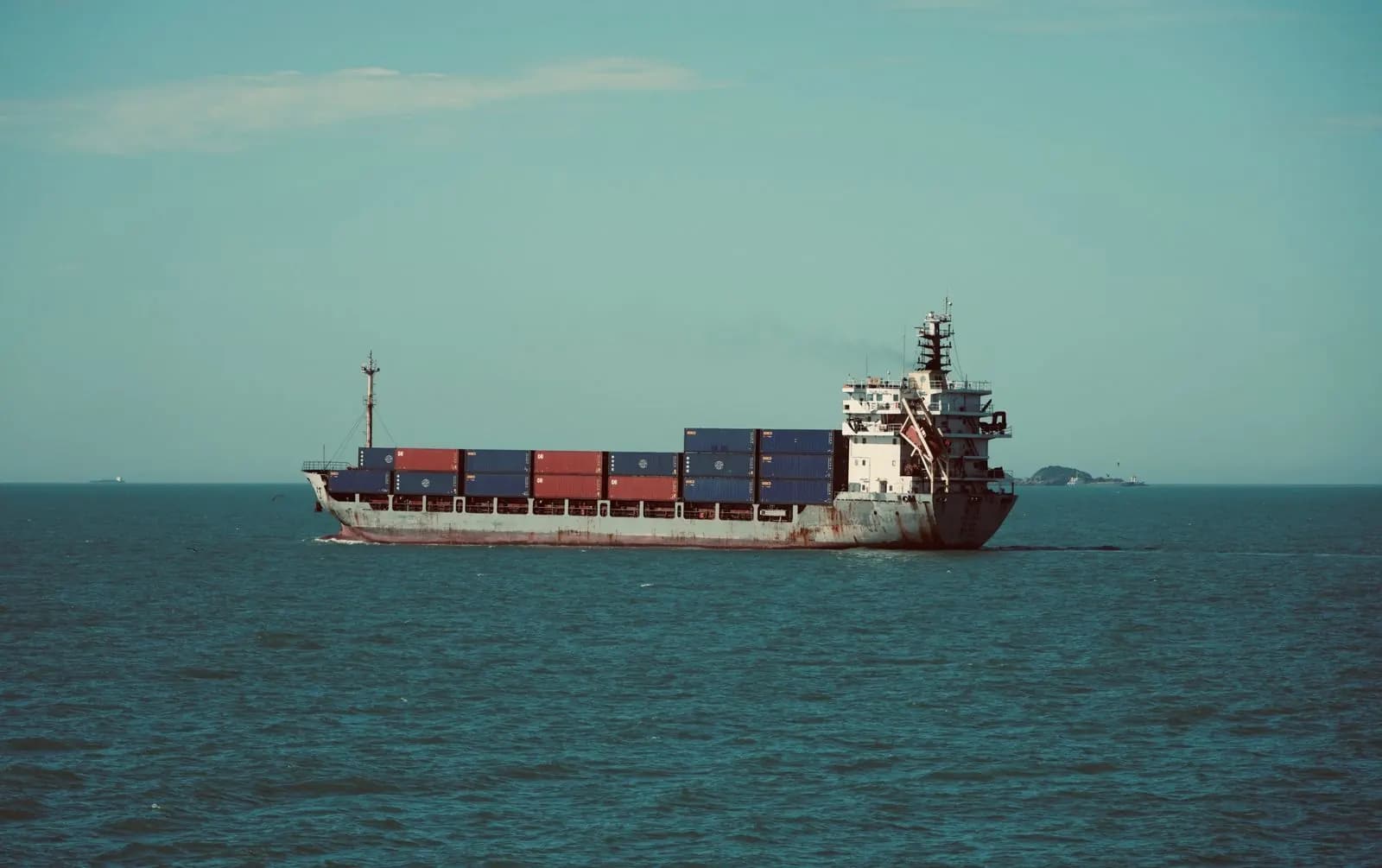
Photo: Ran Hua / Pexels
- Pay
- from US$690
- per month · gross/net not stated
- Experience
- Required
- Work pattern
- За MLC 2006 відпочинок — не менше 10 год на будь-яку добу і 77 год на будь-які 7 днів (або робота не більше 14 год на добу і 72 год на тиждень). Відпочинок можна ділити не більше ніж на два періоди, один з яких — щонайменше 6 год.
- English
- No verified data
- Jobs
- 7
- current, from official sources
About the profession
Merchant navy ratings work in the deck department (deck ratings) or in the engine room (engine ratings). The minimum training requirements for them are set by the International Convention on Standards of Training, Certification and Watchkeeping for Seafarers (STCW), and working conditions by the ILO Maritime Labour Convention, 2006 (MLC 2006). The specific rules are applied by the vessel's flag state.
To work on a ship, you need at least: to be 16 or older, a valid seafarer medical certificate (up to 2 years) and basic safety training. To keep a navigational watch as a deck rating or a watch in the engine room, a separate certificate with a minimum amount of sea service is required. The able seafarer qualification is available from age 18 and after 12–18 months of sea service.
The ILO sets a benchmark for the minimum basic wage for an able seafarer: from 1 January 2026, 690 US dollars per month. This is an international recommendation, not a guaranteed rate: actual pay depends on the contract, the collective agreement and the ship's flag.
The officer path (officer in charge of a navigational watch, engineer officer) requires separate STCW certificates: from age 18, approved education and sea service of 12 months or more within a training programme, or 36 months without one.
Pros
- Seafarers' rights are established internationally (MLC 2006): an employment agreement, minimum rest, paid leave, repatriation at the shipowner's expense
- Accommodation and food on board: under the MLC, the flag state must ensure decent accommodation, and food is provided free of charge for the entire period of work
- A clear career path: from rating on watch to able seafarer and on to officer certificates
Cons
- Long periods on board, far from home
- Certificates need to be renewed: survival and firefighting courses — every 5 years, medical certificate — at most once every 2 years
- The ILO minimum wage is only a benchmark; actual conditions depend on the contract and the flag
- Work at sea involves increased risks, which is why basic safety training is mandatory for all seafarers
- MLC protection depends on the vessel's flag state: before signing a contract, it is worth finding out the flag and the terms
Pay
from US$690
per month · gross/net not stated
Minimum monthly basic wage of an able seafarer as decided by the ILO Subcommittee on Wages of Seafarers (Joint Maritime Commission), in effect from 1 January 2026. Next steps: 704 USD from 1 January 2027, 715 USD from 1 January 2028. Covers normal working hours of no more than 48 hours per week; this is the basic rate without overtime and allowances. An international benchmark, not an actual average wage; collective agreements may set higher levels.
Requirements
Every requirement has a source next to it. A country tag means the requirement applies only there; a citizenship tag means it applies only to that group of candidates.
Licences and certificates
STCW Regulation VI/1: familiarisation and basic training for all seafarers. Personal survival and firefighting courses are renewed every 5 years.
- Ship security training (security awareness)[1]
STCW Regulation VI/6: all seafarers undergo security familiarisation and security-awareness training.
Required for ratings who keep a navigational watch at sea on ships of 500 GT or more. Minimum age 16 and at least 6 months of approved seagoing service (or special training + 2 months).
Required for engine ratings who stand watch in the engine room. From age 16 and at least 6 months of approved experience (or specialised training + 2 months).
Age, language, experience, education
- Age 16 and over[1]
MLC 2006 prohibits employment on ships of persons under 16. Until age 18, night work and work that may harm health or safety are prohibited.
Deck (II/5): 18 months of seagoing service, or 12 months + approved training. Engine (III/5): 12 months of seagoing service, or 6 months + approved training. In both cases — minimum age 18 and a valid certificate of a watchkeeping rating.
Required documents
Documents, medical check, visa and permits
- Seafarer's medical certificate[1]
Mandatory before starting work on a vessel. Valid for a maximum of 2 years (1 year for those under 18); the colour vision check is valid for up to 6 years. A medical certificate meeting STCW requirements is recognised for MLC purposes.
- Seafarer's employment agreement (SEA)[1]
Under MLC 2006, the agreement is signed by the seafarer and the shipowner (or the shipowner's representative). The seafarer has the right to review it and get advice before signing; each party keeps a copy of the agreement.
Preparation costs
Only amounts from official sources. We don't add up a total: prices depend on the country and the training centre.
Step-by-step plan
- 1
Pass a medical examination and obtain a seafarer's medical certificate [1]
The certificate is required before starting work on a vessel; valid for up to 2 years.
- 2
- 3
Obtain seafarer documents [1]
In Ukraine, seafarer certification and the issuance of service record books are handled by the Maritime Administration.
- 4
- 5
Before signing, read the employment contract carefully [1]
The MLC gives you the right to review the contract and receive advice before signing. No placement fee may be charged to seafarers.
- 6
Latest jobs
All 7 →Fisherman / deckhand
Torghatten · 🇳🇴 Norway, Trondheim
Salary not statedFull-timeyesterdaySource: NAV Arbeidsplassen (Норвегія)
Training providedRotation
Fisherman / deckhand
Fjord1 - Maritim Drift · 🇳🇴 Norway, Bergen
Salary not statedFull-timeyesterdaySource: NAV Arbeidsplassen (Норвегія)
HousingTraining providedRotation
Fisherman / deckhand
Boreal Sjø AS · 🇳🇴 Norway, Mehamn
Salary not statedFull-time5 days agoSource: NAV Arbeidsplassen (Норвегія)
Norwegian a plusTraining providedRotation
Fisherman / deckhand
Boreal Sjø AS · 🇳🇴 Norway, Alta
Salary not statedFull-time5 days agoSource: NAV Arbeidsplassen (Норвегія)
Norwegian a plusRotationTravel paid
Fisherman / deckhand
Boreal Sjø AS · 🇳🇴 Norway, Flekkefjord
Salary not statedFull-time5 days agoSource: NAV Arbeidsplassen (Норвегія)
Norwegian a plusHousingRotation
Fisherman / deckhand
Boreal Sjø AS · 🇳🇴 Norway, Havøysund
Salary not statedFull-time5 days agoSource: NAV Arbeidsplassen (Норвегія)
Norwegian a plusRotationTravel paid
Don't miss your chance
Get new jobs for the professions you choose straight to Telegram.
Frequently asked questions
From what age can you work on a ship?+
Under MLC 2006 — from age 16. Until age 18, night work is prohibited (at least 9 hours starting no later than midnight and ending no earlier than 5:00 a.m.), as is work that is hazardous to health or safety. To qualify as an able seafarer, you must be at least 18.
How long is a seafarer's medical certificate valid?+
At most 2 years; for seafarers under 18 — at most 1 year. A colour vision test is valid for up to 6 years. The flag state or STCW may require a shorter period.
How much does a deck rating earn?+
The ILO sets a minimum basic monthly wage for an able seafarer: 690 US dollars from 1 January 2026, 704 from 1 January 2027, and 715 from 1 January 2028. This is the basic rate for normal working hours of no more than 48 hours per week, excluding overtime. Collective agreements may set higher rates.
Can a seafarer be required to pay money for employment?+
Under MLC 2006, recruitment and placement services may not charge the seafarer fees for finding work or employment. The exceptions are the cost of a national medical certificate, the seafarer's book, a passport or a similar document (not including the cost of visas, which is borne by the shipowner).
Who issues seafarer documents in Ukraine?+
Since 22 November 2020, the training, assessment of competence and certification of seafarers, as well as the issuing of seafarer's books, have been handled by the Maritime Administration.
Related reading
Sources of information
- 1.Resolution concerning the ILO minimum monthly basic pay or wage for able seafarers (April 2025), SWJMC/2025/ResolutionILO, Subcommittee on Wages of Seafarers of the Joint Maritime Commission · verified 24 November 2026
- 2.Directive 2008/106/EC, Annex I, Chapter VI — Emergency, occupational safety, security, medical care and survival functions (Regulations VI/1, VI/6)legislation.gov.uk (The National Archives) · verified 24 November 2026
- 3.STCW Refresher requirementsDanish Maritime Authority (Søfartsstyrelsen) · verified 24 November 2026
- 4.Raft of shipping rules in force from 1 January 2026International Maritime Organization (IMO) · verified 24 November 2026
- 5.Maritime Labour Convention, 2006, as amended [Including 2022 amendments]International Labour Organization (ILO) · verified 24 November 2026
- 6.Subcommittee on Wages of Seafarers reaches agreement to increase seafarer minimum wage following negotiationsInternational Labour Organization (ILO) · verified 24 November 2026
- 7.Decision concerning sectoral meetings held in 2025 and proposals for sectoral work (GB.355/POL/3)ILO Governing Body · verified 24 November 2026
- 8.Directive 2008/106/EC, Annex I, Chapter II — STCW requirements: master and deck department (Regulations II/1, II/4, II/5)legislation.gov.uk (The National Archives) · verified 24 November 2026
- 9.Directive 2008/106/EC, Annex I, Chapter III — STCW requirements: engine department (Regulations III/4, III/5)legislation.gov.uk (The National Archives) · verified 24 November 2026
- 10.How manila amendments affect seafarer training and certificatesMaritime and Coastguard Agency (UK) · verified 24 November 2026
- 11.SASH – training and refresher courses for seafarersNorwegian Maritime Authority (Sjøfartsdirektoratet) · verified 24 November 2026
- 12.Функції Інспекції з питань підготовки та дипломування моряків передано до Морської адміністраціїУрядовий портал (Кабінет Міністрів України) · verified 24 November 2026
- 13.Ukraine advances on path to ratifying ILO Maritime Labour Convention, 2006International Labour Organization (ILO) · verified 24 November 2026
Verified 24 November 2026
Spotted an error? Let us know — we'll check it and fix it.